
Interrogating Alaa Aswany
I met the Egyptian literary great and was difficult with him. Every person of taste should immediately read all his books.

I recognized Alaa Aswany across the rooftop at Cairo’s Garden City Club, across a smoky haze. Gadzooks! To fortify myself I downed a double whiskey, then swiftly poured another. I rarely meet authors I love, as mostly they’re long dead. Yet here was this one — alive, smoking, and expertly holding court. Action was required.
I’ll happily engage with almost anyone in a dive bar, but with literature I am a snob. My shelves creak under the weight of the classics, and newer works tend to bore me. I sense that we ran out of literary elements about 50 years ago and now suffice with pale composites. I’m not proud of this critique; it just seems sadly so.
This article is published on the 20th anniversary of the publication of The Yacoubian Building in the United States. It amplifies and reproduces an anecdote mentioned in another article some years ago, about the last book of Gabriel Garia Marquez. To unlock full access to Ask Questions Later consider an upgrade to a Paid Subscription.
I also dislike the fashion against experts and will not indulge it – loyal readers must know this. So when traveling I ask an expert: What’s the one thing I should read about this place? On Haiti, the person replied: “The Comedians by Graham Greene. He was not Haitian, it is true, but this is the book to read.” I adored this chronicle of Caribbean skullduggery, mentioned it in an AP story, and proceeded to read everything Greene had ever penned. Few are the finer pastimes.
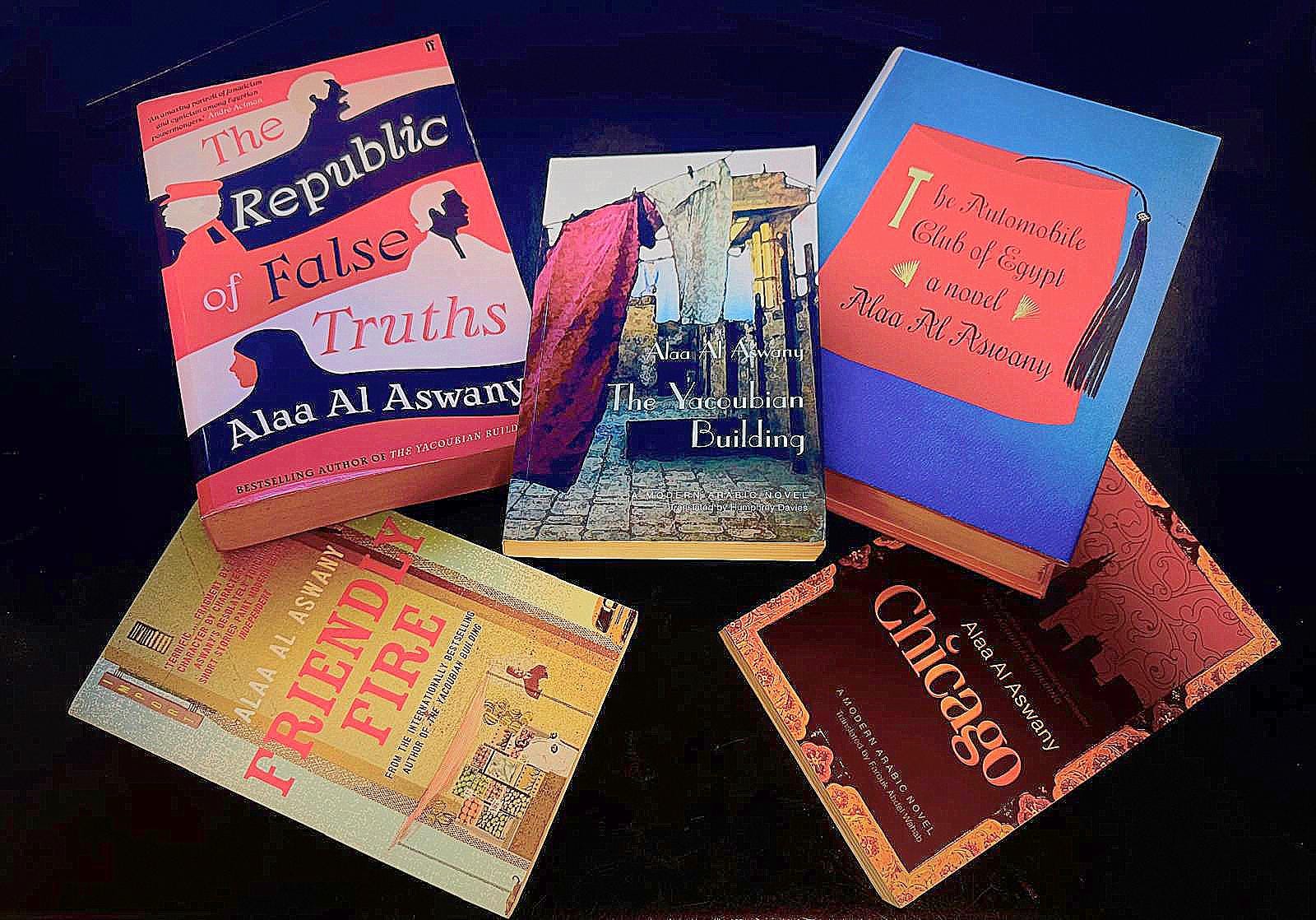
Arriving in Cairo in 2011 for the AP, I was advised to read The Yacoubian Building by Aswany. The tale gripped me as expected: my advisor was an expert. And while the troubles of 1970s shoe-shiners and shirt-makers are interesting, what I truly loved was a series of skillfully deployed devices.
First, the passage of time: Fear of death is the great equalizer, so a story that tracks a person through learning or to decrepitude will stir the soul. Also, interwoven narratives: Every person we meet has the potential to alter our future, and while multiple narratives can be a cheap device, in the hands of a master they mesmerize as wonder when they will connect. No less important, if a writer can summon up sex without vulgarity, here is the ultimate frisson (the gold standard of this is Burning Secret by Stefan Zweig). And random absurdities are delightful, for there is no real rhyme or reason, and never was.
Aswany had all these covered, and so I read his second novel, Chicago, and a book of stories as well. In 2015 his latest novel arrived — The Automobile Club of Egypt.
This brilliant novel contains two prologues — one set in the present in a gated community on the Mediterranean coast of Egypt, where something magical occurs, and the other in 1800s Germany, where a newlywed couple experiences some troubles whose outcome will soon alter all our lives. When we discover how they connect, and how they bring us to the exclusive Cairo club frequented 80 years ago by King Farouk, it is so masterful that we simply must stop, reflect, admire.
I posted on Facebook: “I am finding The Automobile Club of Egypt almost impossible to put down, as evidenced by the late hour.” Four days later I found myself marching across the rooftop of the Garden City Club — which was essentially the contemporary incarnation of the titular club.
“Dr. Aswany,” I said. He shot up from his seat at an enormous low table filled with ashtrays, where he had been holding court. “Yes, hello,” he genially replied.
“This book you have just written gave me immense joy, as all your books have done,” I said, with less than journalistic dispassion. “Please just keep them coming, and know you have a fan.” I prepared to go, but Aswany insisted in a sonorous voice dripping with bonhomie and grace: “You will join us at the table.”
Decorum required me to hesitate even a little, perhaps protest. But, the whiskey. I mumbled something and sat down as instructed. The conversation at the table thus was forced to move to English, which the assembled accepted with practiced grace. In liklihood, I was not the first anglo-sycophant they’d seen.
At this point my own grace took its leave, I’m somewhat sad to have to say. I reverted without warning to journalistic type.
This thing was this: I had heard a rumor — Cairo swirls with every conceivable rumor, mostly moronic — to the effect that the books of Aswany were in fact ghostwritten by his wife. He is a dentist from a family of no repute whereas she is a devout Muslim who was believed to be clever but must shun all earthly fame to satisfy the prophet’s interpreters and respect their patriarchic ways. I do not know whether it was my keen journalistic curiosity or my whiskey-addled mind that compelled me to test this vexing hypothesis with the literary celebrity who had just invited me to crash his party.
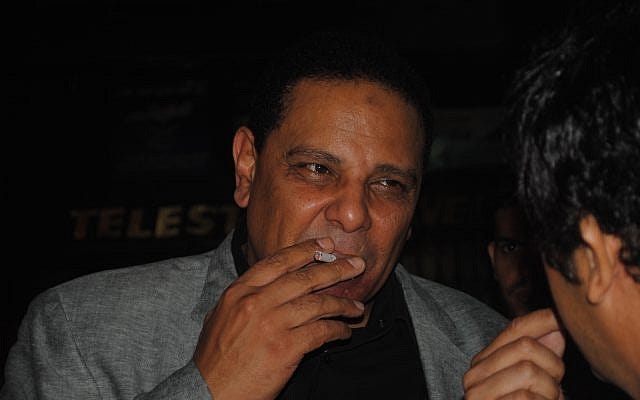
“Dr. Aswany, if I may: What are literary influences from which you glean inspiration for your work?”
The dentist-cum-potential-novelist replied: “Oh, the influences are many, each sublime in its own way. But for me, ultimately, it is the Latin American school that moves the spirit.”
“Is any particular author your favorite?” I pressed on.
“In theory there are many, but in reality, as you must know, it can only be Gabriel Garcia Marquez,” he replied, affability intact. “Naturally,” he added, dragging on his cigarette and calmly surveying the others, some of whom seemed troubled.
“Which of his books?” I insisted.
There was a moment of silence. I remember a police siren audible in the distance. Aswany considered me as one does, I believe, a tax inspector. It may be my memory playing tricks, or perhaps the suffocating smoke, but I think his eyes narrowed just a tad. “Perhaps you would expect me to nominate One Hundred Years of Solitude, my friend. Or Chronicle of a Death Foretold. But I will surprise you. For me, the most evocative of his works is Love in the Time of Cholera.”
Indeed! A 1985 story of the love of two men for the same woman. Aswany had made a fine choice, suggesting expertise and agency.
Certainly this was good enough for me. As the effects of the whiskey began to fade, I regretted the interrogation. Aswany warmly pressed his business card into my hand. I vowed to myself never to abuse this, but soon betrayed this vow.
A few weeks later, needing an idealistic voice for an article I was writing about the wreckage of the Arab Spring — wars and disappointment everywhere — I called him up, and he happily obliged.
“What do you say to those who argue the regional catastrophe shows Arabs are not ready for democracy?” I asked. He supplied the perfect quote: “The idea that some people are not prepared for justice is racist. It reflects a lack of respect for people. I absolutely disagree with it.” Boom.
I neglected to inform Aswany that I was calling from the Brown Hotel in Tel Aviv. In retrospect, that may not have been so sporting, since I knew very well that he dislikes Israel with conviction. I imagine he would rather be ghostwritten by his pious wife than quoted by a reporter having a beer at the bar in Tel Aviv. All things considered, I am sorry for the subterfuge, but only a little.
Perhaps, in retrospect, I did not show Aswany the best of all my possible sides.
If he happens to read this, I can only hope he lives by his own wise words from The Yacoubian Building: “Everything that happened to you is a page that's been turned and is done with.”
“The heart's memory eliminates the bad and magnifies the good (and) thanks to this artifice we manage to endure the burden of the past.” ― Gabriel García Márquez, Love in the Time of Cholera
Word! "If he happens to read this, I can only hope he lives by his own wise words from The Yacoubian Building: “Everything that happened to you is a page that's been turned and is done with.”"
I stoop to envy.