
Kosovo Diary
Marking 18 years of independence in a place where nationhood, memory, and forgiveness remain unfinished business

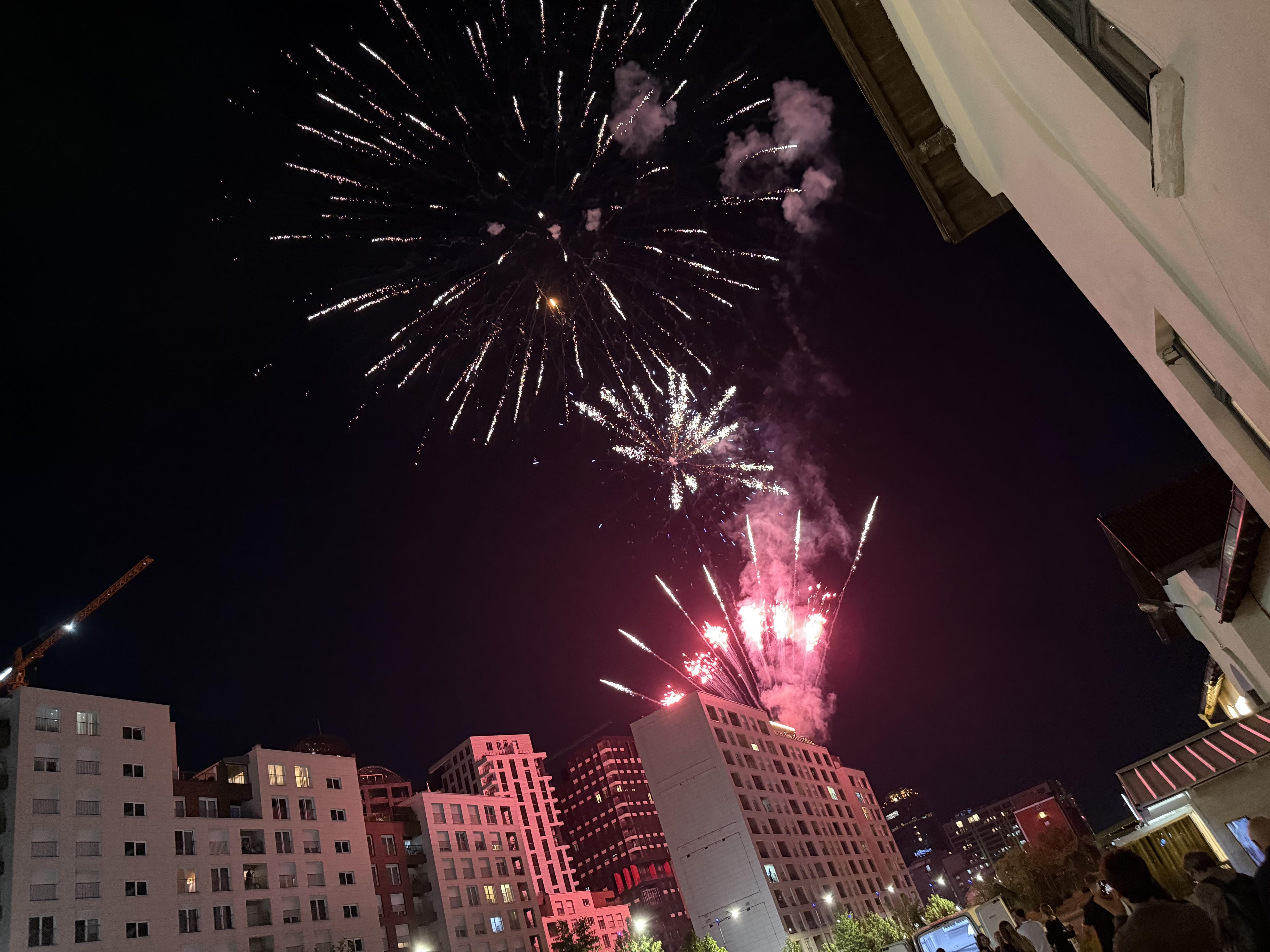
What makes a country? Is it language? Ethnicity? A common history? Geography? Is it easier to justify nationhood on an island, where the sea itself creates a border, than on a contested patch of land where every village contains an argument with the past? Or is a country simply a people determined to govern themselves and fend off others?
The answer is less obvious than we pretend, with our delusions of inalienable rights to self-determination and silly notions of indigeneity. The world today contains roughly 200 sovereign states. Is that the right number? Should there be more? Should there be fewer? What about supranational entities like the European Union, where nations voluntarily pool aspects of sovereignty in the hope that borders will matter less? I think it may be useful. Am I alone?
Most people go about their lives without pondering such questions. And then there is Kosovo.
Consider upgrading to a Paid Subscription to unlock access to all content including the Critical Conditions podcast - and also enable us to hire a real cartoonist
I am here on Liberation Day, June 12, commemorating the end of NATO’s 1999 air campaign against Serbia and the arrival of international forces that would oversee Kosovo’s passage from Serbian province to protectorate and eventually to an independent state. Kosovo declared independence in 2008, making this the eighteenth year of its contested existence as a sovereign republic.
Contested is the operative word, and you can feel it talking to people here. Kosovo has a flag, borders, police, elections, ministries, passports, and a national football team. It functions in most respects as an independent country. Yet Serbia rejects its sovereignty. Russia and China reject it as well. Five members of the European Union still refuse recognition. Kosovo remains outside the United Nations, forced to justify its existence in ways most states never have to.
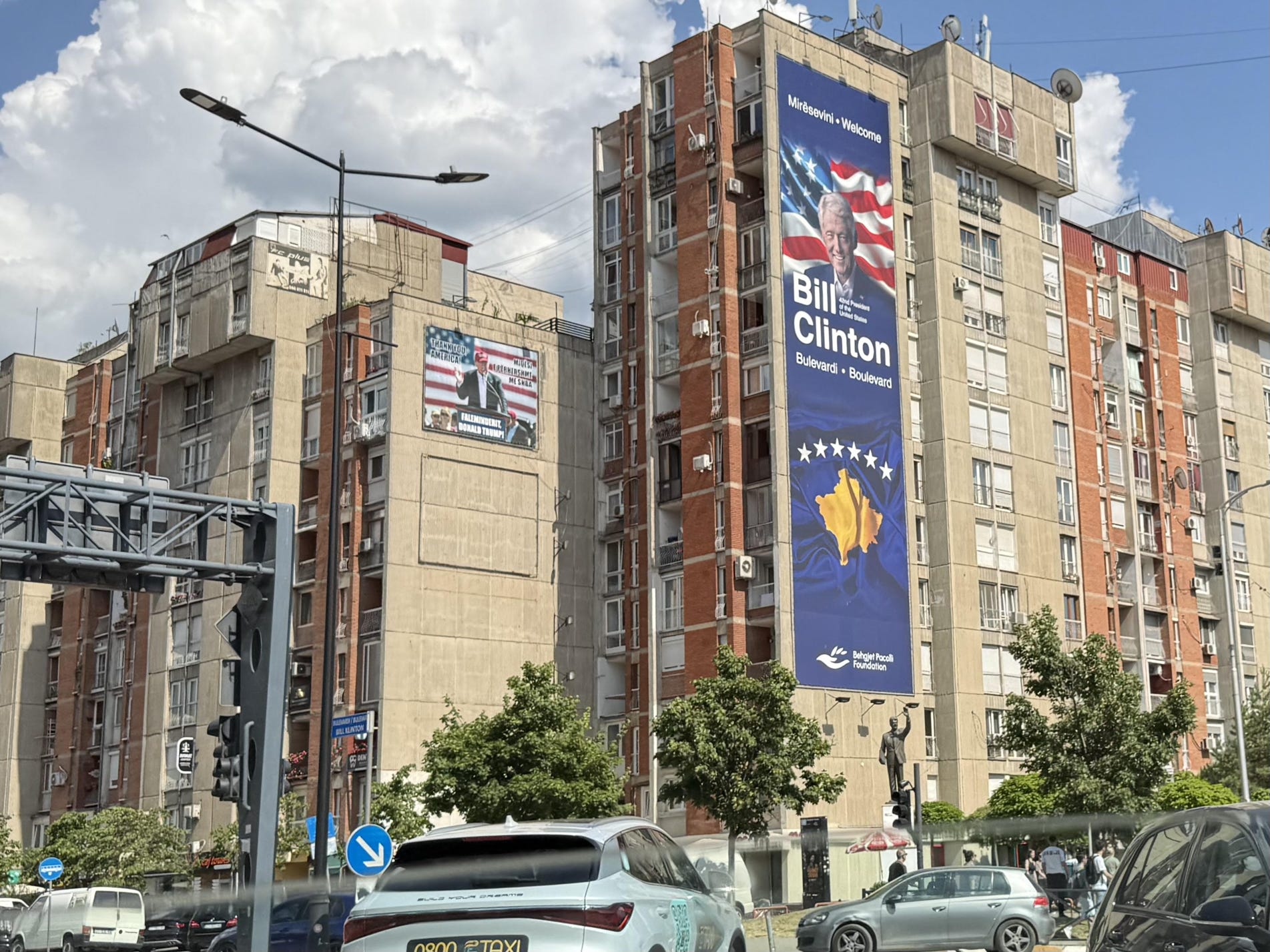
So Kosovo is a perfect illustration for the idea that there is no universally accepted formula for what makes a country. On one hand, it can feel like we are nothing without the recognition of others. One the other, the hell with the world. But not with the United States. Rarely have I sensed such appreciation for my American accent. Never have I heard such adulation for Bill Clinton, who was president at the time. There is a statue of him in the center of town.
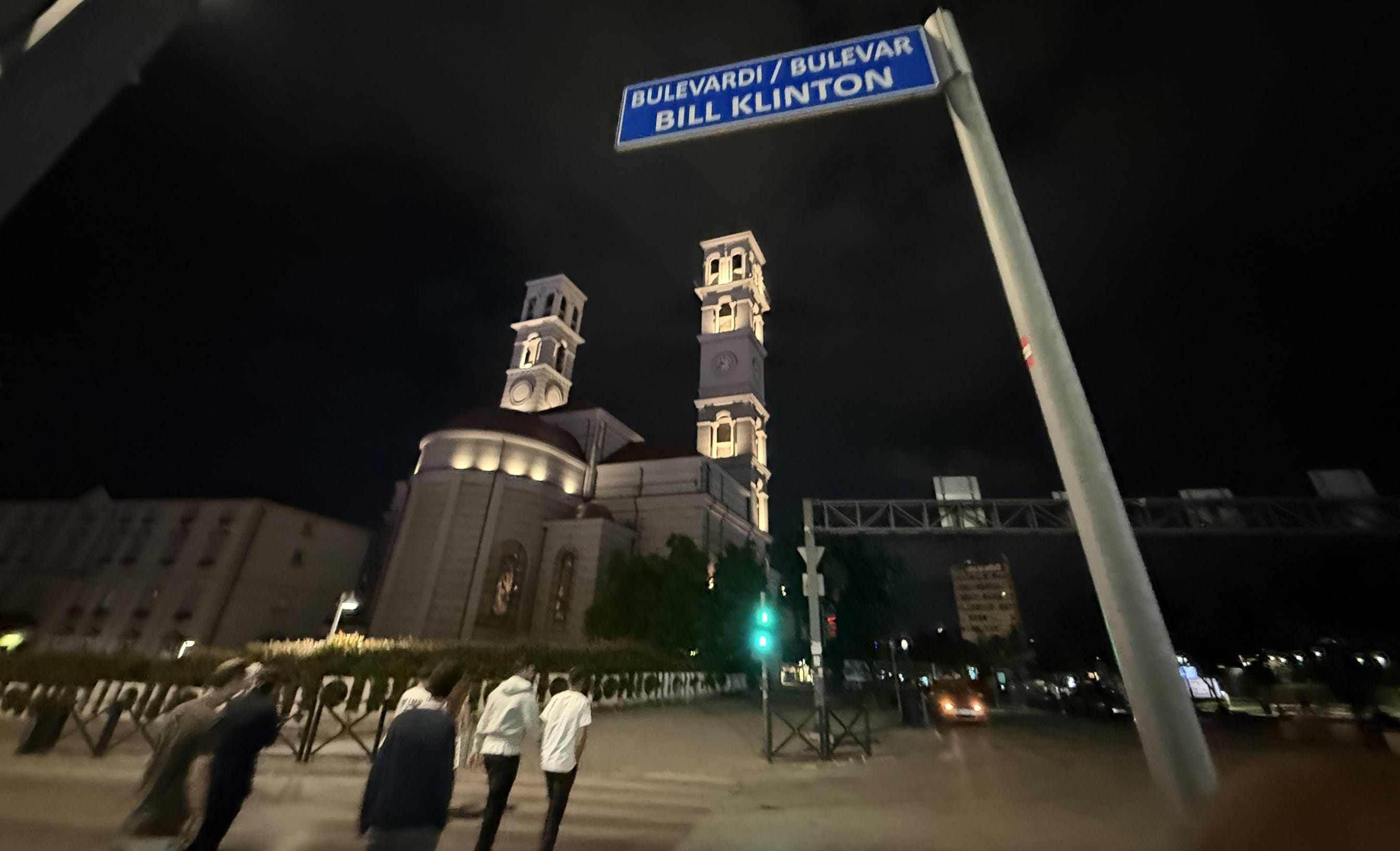
And here, for good measure, is a cathedral whose donations were organized by US Democratic Jewish Senator Chuck Schumer, on a boulevard named after the president of that time. Is it reasonable? I suppose that depends on what your definition of “is” is.
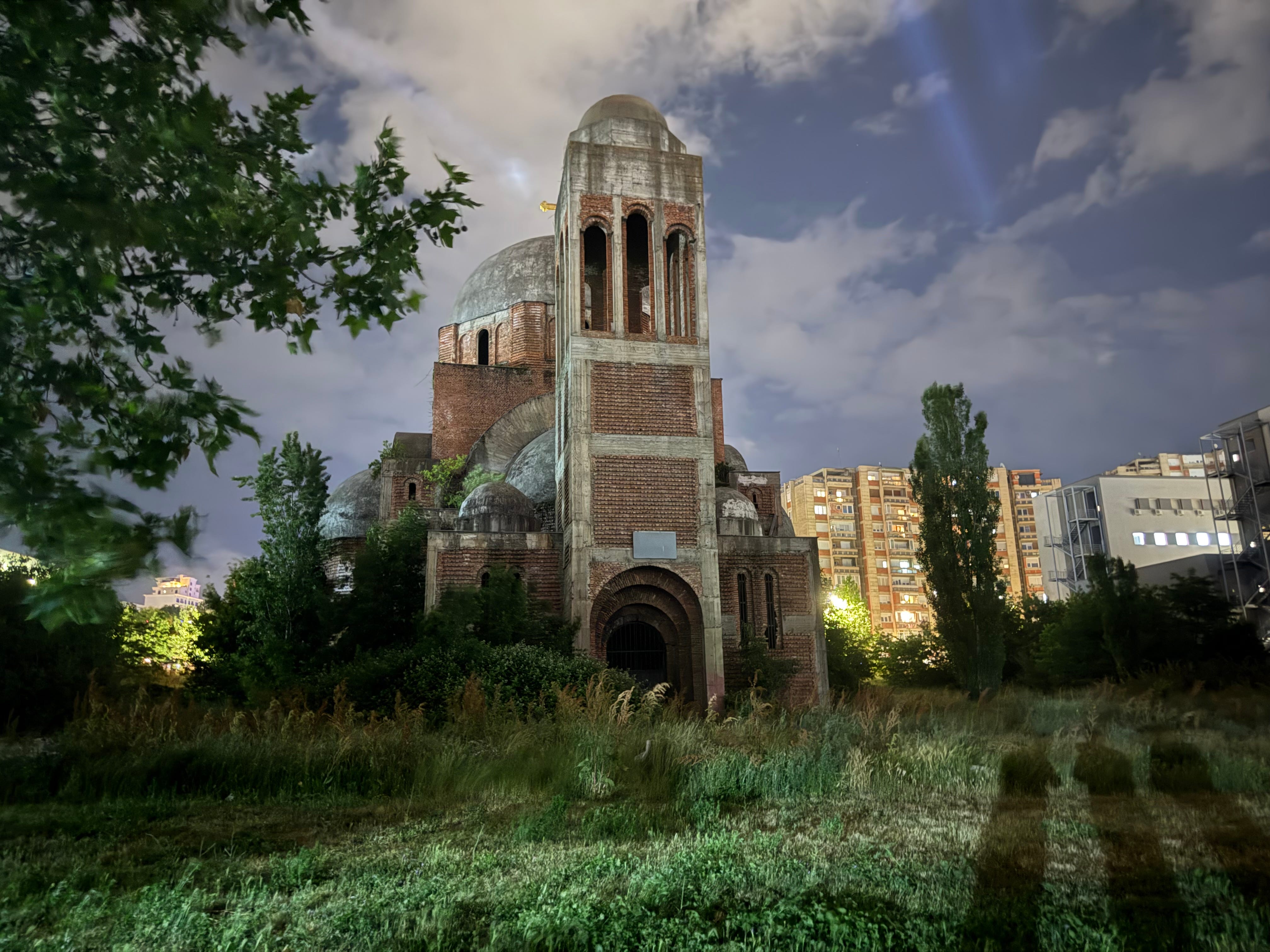
And if you’d like more churches, there is also the unfinished Serbian Orthodox Church of Christ the Saviour, standing awkwardly beside Pristina’s university campus like a stranded remnant of another era. Construction began under Milosevic in the 1990s and stopped with the war, leaving behind a half-completed shell that is part church, part monument, part provocation. To Serbs, it represents the enduring continuity of Orthodox Christianity in Kosovo. To Albanians, it symbolizes political domination imposed during the final years of Serbian rule. Its meaning derives from the state of being unfinished.
Yes indeed, the map of the world is a compromise and a happenstance, and the Balkans expose this perhaps more clearly than anywhere else. The very word “Balkanization” entered global vocabulary as shorthand for fragmentation — the fear that every community, valley, language group, or grievance might eventually demand its own flag and border crossing. Yet the irony is that the Balkans also produced one of the communist world’s most successful multinational states: Yugoslavia. I visited Belgrade in the ear;y 1990s, when it was the most successful of communist capitals; it had a McDonalds. Little did I know what lay in store.
Under Marshal Tito, Yugoslavia charted an independent path between East and West. Its citizens traveled abroad. Western tourists crowded the Adriatic coast. Serbs, Croats, Slovenes, Bosniaks, Macedonians, Montenegrins, Albanians, Hungarians and others coexisted inside one state that, for decades, appeared remarkably functional. Tito balanced competing nationalisms while suppressing them. After his death in 1980, the structure weakened. Economic crisis deepened. Nationalist leaders discovered that ethnic agitations mobilized people more effectively than socialist ideology ever could. The champion of this was Milosevic. He wanted to keep Yugoslavia together, but under the boot of Serbia. Slovenia and Croatia seceded in 1991. Croatia proved bloody. Bosnia became catastrophic. Europe witnessed sieges, ethnic cleansing, concentration camps, massacres and mass displacement on a scale many had believed impossible after 1945.
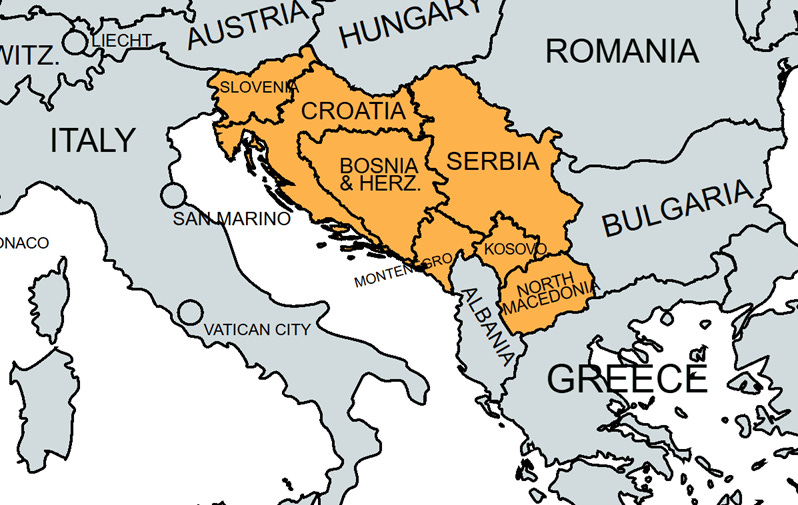
I remember those years vividly from my time with the AP in Vienna (which, indeed, is my next planned stop on this trip), watching reports arrive that initially seemed tragic but isolated. In retrospect, they were the opening shots of Europe’s deadliest conflict since World War II.
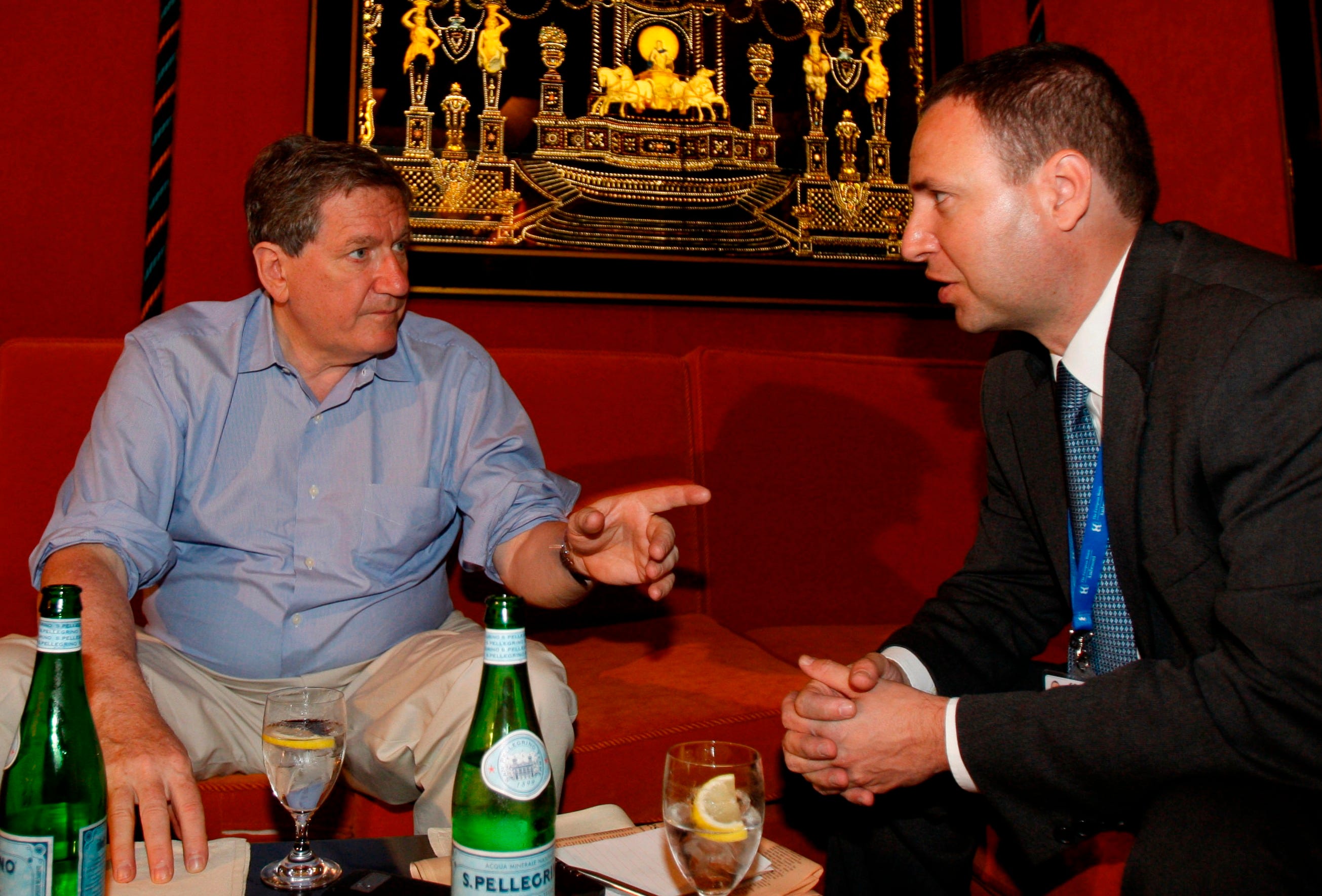
Again, America proved indispensable, and useful; it was a different time. Clinton’s envoy Richard Holbrooke bullied, flattered, threatened, and exhausted Balkan leaders into signing the 1995 Dayton Accords, ending the Bosnian war after nearly four years of massacres and siege warfare. The agreement preserved Bosnia as a single state but divided it into ethnic entities, freezing the conflict politically even as it stopped the killing militarily.
Kosovo was the unfinished chapter. For Serbs, Kosovo occupies a place somewhere between history and mythology. The defining event is the 1389 Battle of Kosovo, when Serbian forces confronted the advancing Ottoman Empire on the Kosovo Plain. Militarily, historians still debate aspects of the battle, but in Serbian national consciousness it became a story of sacrifice, resistance, and martyrdom. Kosovo evolved into the symbolic cradle of Serbian civilization, home to medieval monasteries and some of the holiest sites of Serbian Orthodoxy.
Yet there was one small problem: modern Kosovo was overwhelmingly Albanian – the same ethnicity, speaking the same language, as the little country to the west, which had been the most repressive of the communist dictatorships.
Yugoslavia managed the tension imperfectly through autonomy arrangements, but when Yugoslavia collapsed, the contradiction exploded. Milosevic’s revocation of Kosovo’s autonomy in 1989 intensified Albanian resistance. Parallel schools and institutions emerged. Initially, Kosovo’s independence movement was strikingly nonviolent. But as Yugoslavia disintegrated violently elsewhere, frustration deepened. By the late 1990s, the Kosovo Liberation Army had emerged, Serbian repression escalated, and Kosovo descended into war.
The conflict culminated in 1998–99. Reports of atrocities, ethnic cleansing and mass displacement led NATO to intervene militarily without explicit authorization from the UN Security Council. In probably the biggest exodus in Europe since World War II, over one million people were driven out of their homes by Serbian forces between March and June 1999.
“Some of us were teenagers and journalists in 1999 and have avoided talking about this for 30 years, covering Kosovo’s much more urgent issues,” said Jeta Xharra, journalist and co-founder of the Exodus 99 museum. “Now we are a bit more of a normal country, enough time has passed for us not to be scared that we will be wiped off and expelled again. We have been rebuilding our country but not healing our souls enough, not reflecting enough how we made it through.”
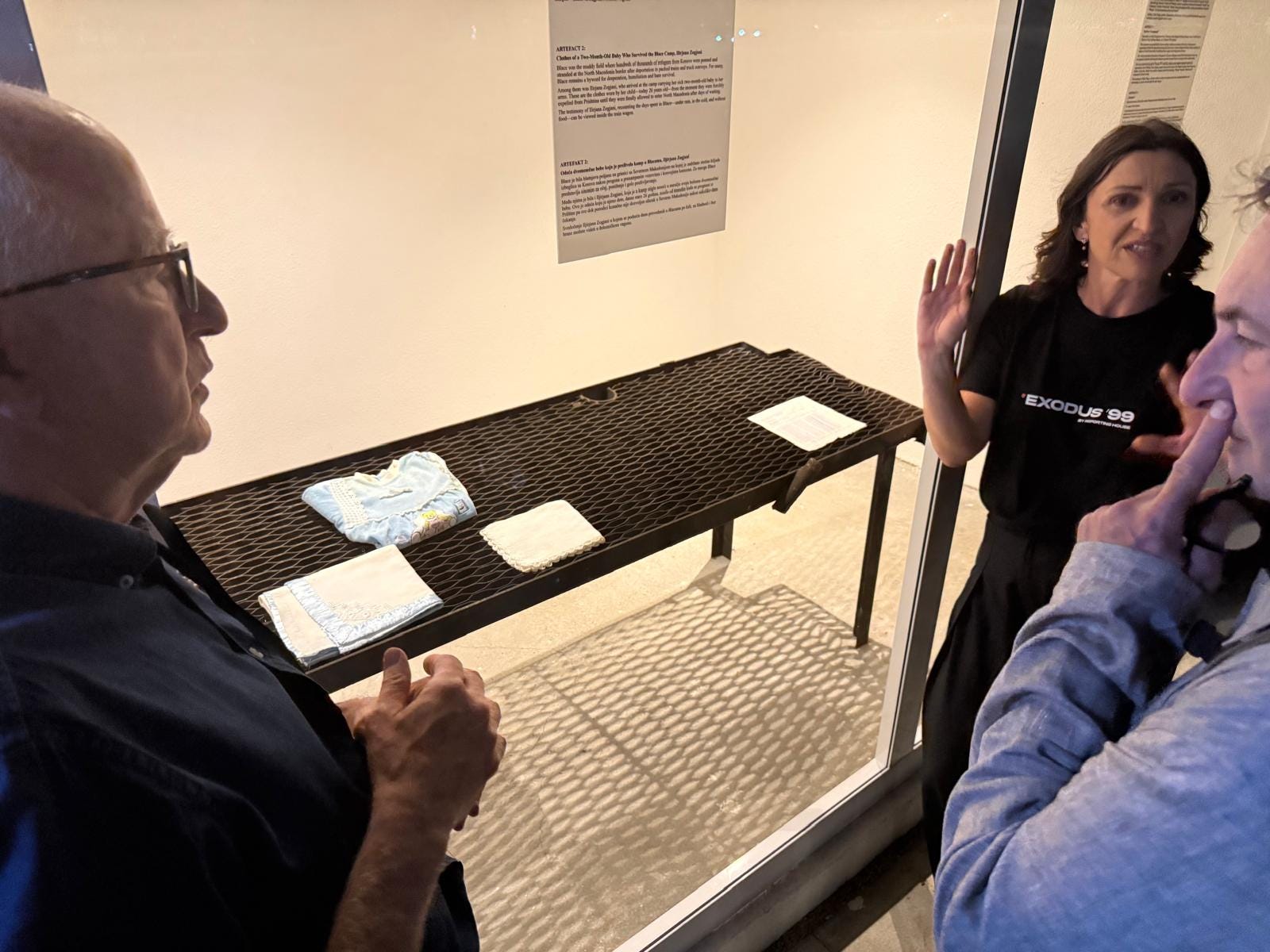
Oddly, few outside this country know of this episode. Serbs even took people’s ID cards so there would be no record. After Serbia’s thrashing at the hands of NATO, they basically all returned. Jeta this week launched a little museum in their honor, located in a decommissioned railway car. It is a thing to behold, I thought, as my new friend Petrit Selimi organized a Japanese single malt for me. Harrowing on the one hand; a good ending on the other; and either way, a labor of love for Jeta.
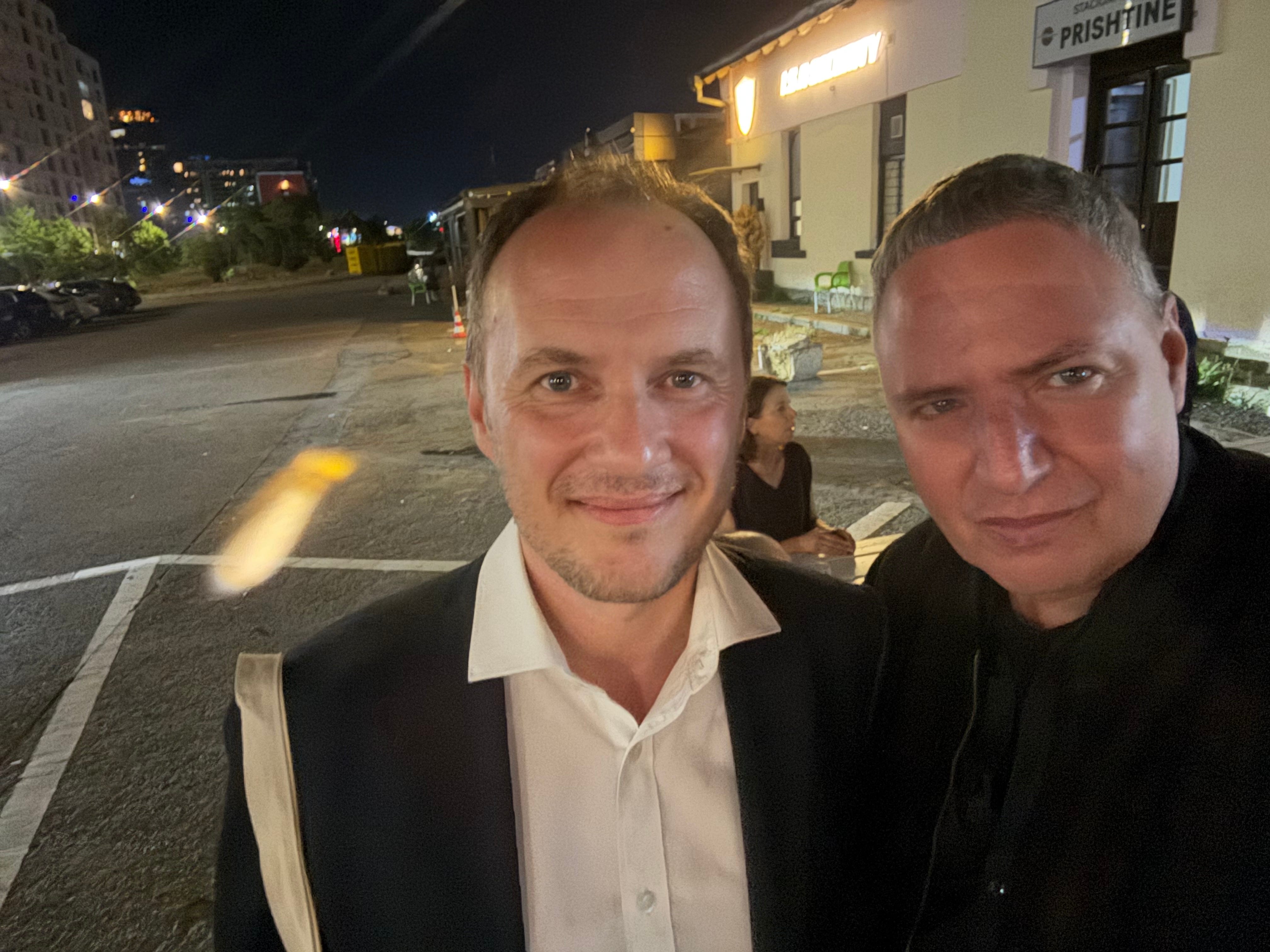
Petrit had organized a conference this week about post-conflict reconciliation, and I was an invited speaker.
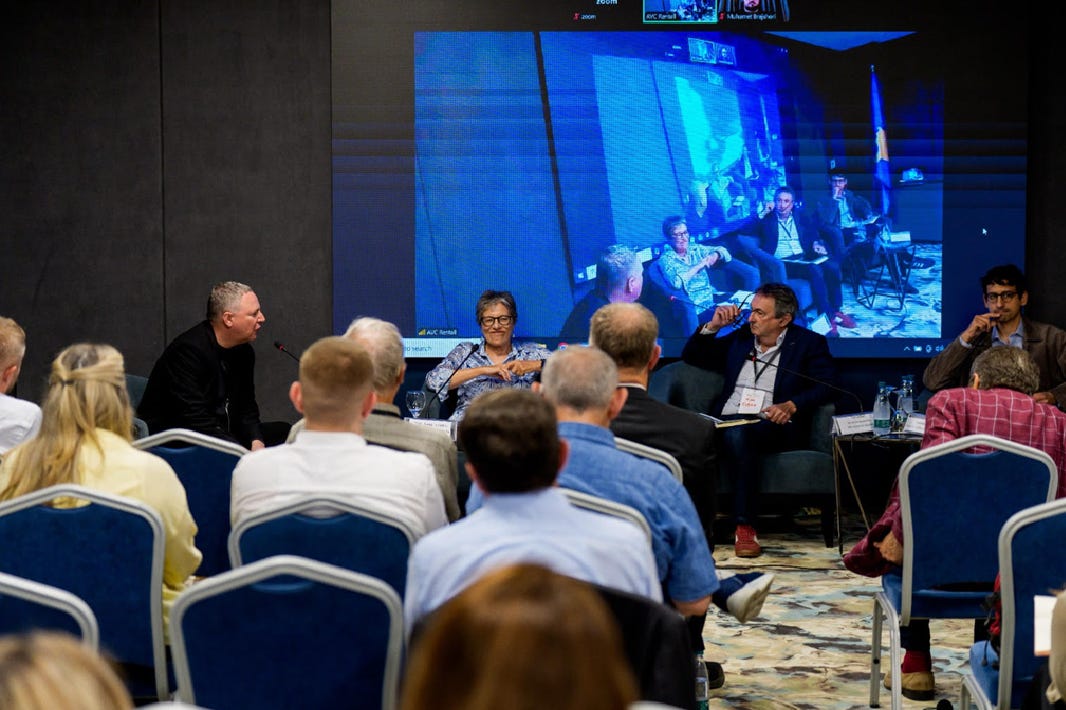
Petrit had long served as the deputy foreign minister, and briefly as foreign minister; good enough – it counts, and made him a good person to ask about unification with Albania. So obvious, no? He thought it unrealistic. But like others, he noted that if all the countries became members of the European Union, it would also be somewhat irrelevant – unification in all but name. Sadly, he also thought that EU accession was not likely in the foreseeable future – too many objections, from non-recognizers in the EU and whatnot.
It is hard for me to believe that anyone actually listens anymore to Serbia, which has emerged very much diminished from the Yugoslav wars and is currently something of a backward nationalist swamp in the pocket of Vladimir Putin. But the fact is that whatever deal there is to be done with Serbia that would involve wider recognition of Kosovo has not yet occurred. Either way, Petrit believes Kosovo’s efforts to be admitted to the EU will yield better governance, which appears to be the only political issue in a country you’d think would be more geopolitical.
One complication: If Albania joins the EU and Kosovo does not, there will be a hard border dividing the intertwined societies. That could harm ties between families and friends, commerce and tourism. Special arrangements will be required, perhaps along the model applied in the island of Ireland after Britain crashed itself out of the Union. Free advice for the genius diplomats.
Petrit is also much concerned with post-conflict justice. More Albanians than Serbs have been tried in Kosovo for the wartime misdeeds, which people attach to an effort to impress outsiders. The consensus, he says, is that it has not worked. This also attaches to the ongoing trial of Hashim Thaçi, the former Kosovo president and ex-leader of the Kosovo Liberation Army. It has become one of the country’s deepest political fault lines. Prosecutors accuse them of war crimes against Serbs, Roma, and alleged collaborators; supporters view the case as an attack on Kosovo’s liberation struggle itself. Many want to see it ended.
Incredibly, my visit also came days after last Sunday’s latest national election. It produced complication rather than resolution. Prime Minister Albin Kurti and his Vetevendosje movement again emerged clearly ahead, but without the outright parliamentary dominance they once enjoyed, leaving coalition arithmetic and presidential maneuvering unresolved. Yet what is striking about Kosovo politics is not ideological polarization so much as its absence. On the largest questions — Europe, relations with the United States, eventual EU membership, suspicion of Serbia, even broad social secularism — there is remarkably little real disagreement between the main parties. The divisions are less philosophical than personal, regional, and transactional: who governs, who distributes patronage, and who controls the machinery of the still-young state.
Indeed, I seem to be one of the few people inclined to speak of unification with Albania – even though many of Kosovo’s political leaders emerged by giving it lip service. I am reminded a little of my meeting in 1992 with newly minted Moldovan President Mircea Snegur; Moldova is a fiction, ripped away from Romania during World War II. Many assumed reunification would happen after the fall of communism – but Snegur, it became clear to me, preferred being president of a country to perhaps governor of a province.
“We did not struggle for our independence all these years merely in order to hand it over to Albania,” said Veton Surroi — publisher, political thinker, diplomat, and one of the liberal voices of the independence movement.
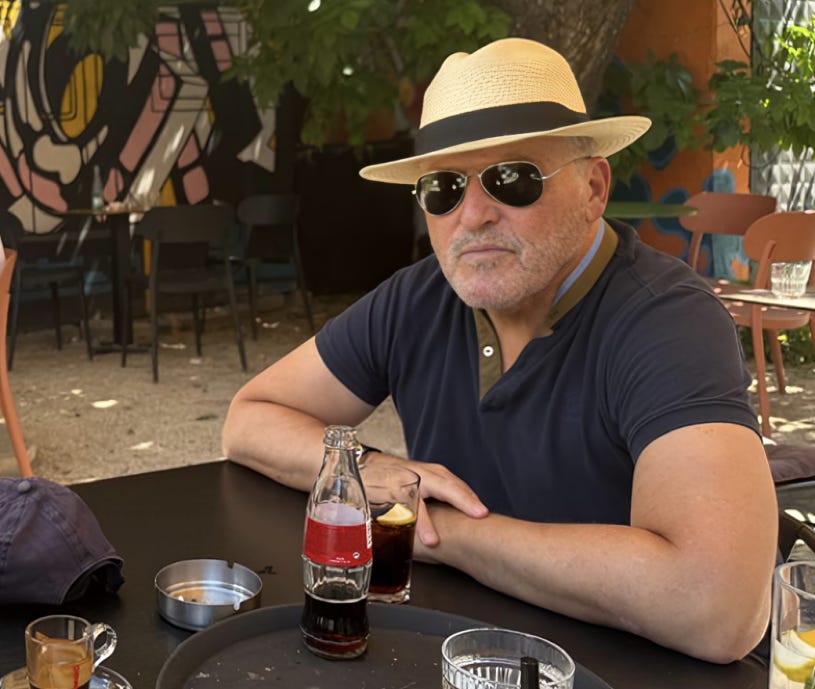
He described this as rejecting a “monocentric” solution to the Albanian question — the idea that all Albanians should gather politically under one center in Tirana. In the 1990s, this was seen as realism: a push for Greater Albania would have frightened Western governments, destabilized neighboring Macedonia and Montenegro, and potentially triggered wider wars. So Kosovo’s independence movement framed itself not as an expansionist nationalist project but as a demand for self-determination within Kosovo itself.
Of course, this being the Balkans, nothing is quite clean. Northern Kosovo contains Serb communities that resist integration into Kosovo’s institutions and maintain close ties to Belgrade. Their arguments sometimes sound strikingly similar to those once made by Kosovo Albanians against Serbia. There are Albanians in every neighboring country. Meanwhile, the population of Albania itself is ever shrinking: it had roughly 3.3 million people in the early 1990s, while today the population is around perhaps 2 million and still declining. Large Albanian diasporas now live in Italy, Greece, Germany, Switzerland, the UK, and the US.
Petrit once invited a young British-Albanian teenager – who was actually of Kosovo origins – to sing in Kosovo. Today his signed artifact by Dua Lipa is a prized possession.
As in many places that have emerged from conflict, Pristina possesses a vibrant nightlife, of which locals seem intensely proud. Petrit took me to Soma Book Station, a wonderfully improbable establishment that functions simultaneously as bookstore and bar, and which was overflowing late into the evening.
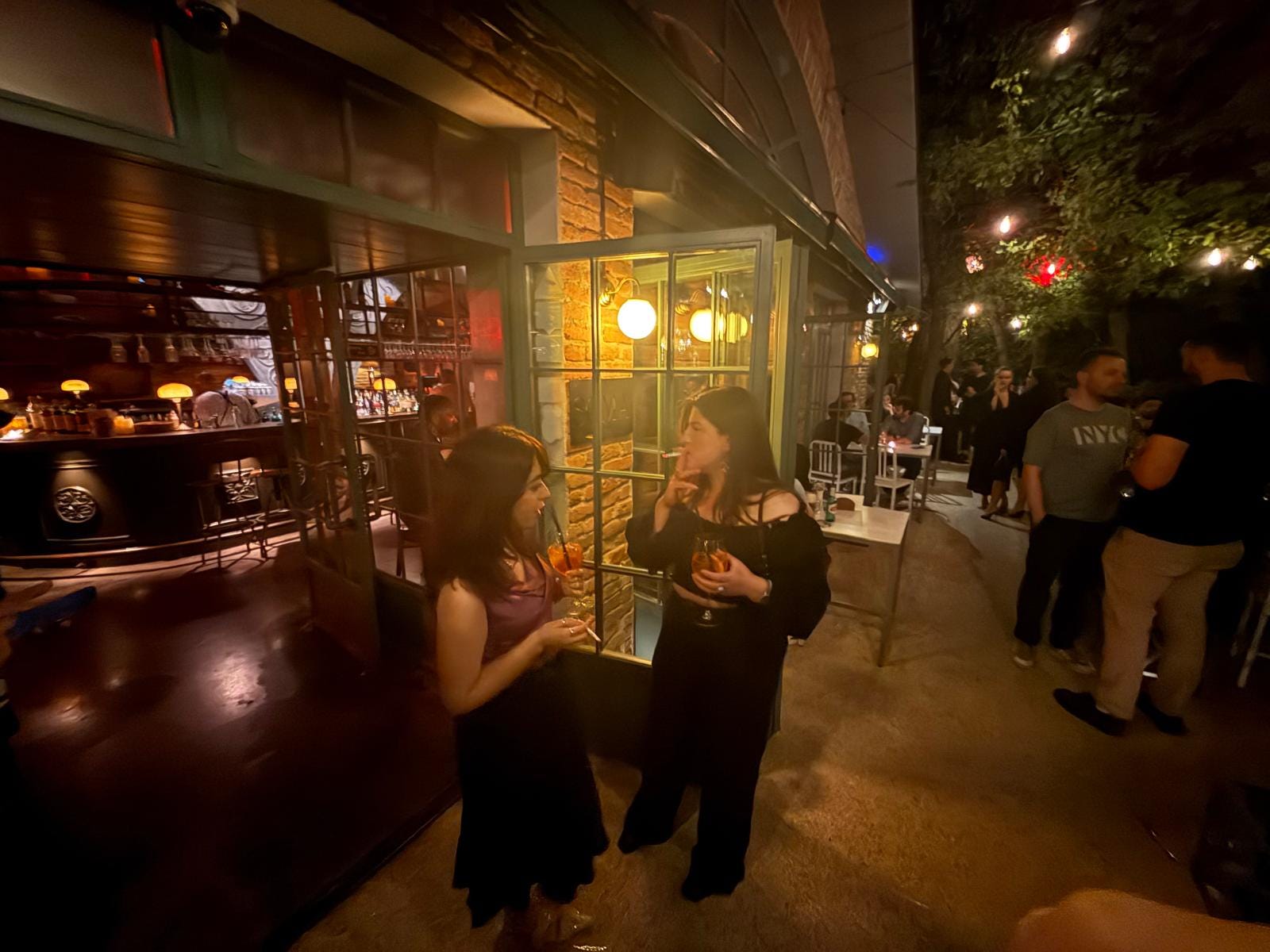
We talked politics over drinks, though what struck me most was not ideology but pride. For Petrit and many of his generation, Kosovo’s existence itself represents the partial fulfillment of a life’s work.
One frustration they clearly feel is the extent to which outsiders still project Middle Eastern assumptions onto Kosovo simply because most Kosovars are nominally Muslim. The Ottoman Empire left deep marks here, as it did across the Balkans, including the spread of Islam – and, of course corruption. Despite the efforts of Turkey and other meddlers to pump up Islam here, the political and cultural atmosphere in contemporary Kosovo has far more to do with post-communist Europe than with religious revivalism. Visible religious conservatism is limited. Women in overtly Islamic dress are uncommon enough to attract notice. Kosovo feels unmistakably European (well, Balkan) in culture and temperament — secular, caffeinated, argumentative, and oriented psychologically toward the continent to which it insists it belongs.
Indeed, Kosovo is one of the few countries whose embassy in Israel is in Jerusalem and not Tel Aviv. That was part of a deal whereby Israel recognized Kosovo despite its longstanding ties to Serbia. All this was pushed by Trump. It is fair to say that he, like Clinton, is far more popular here than back home. If you’re American around here, you’re basically good to go.
The conversations here inevitably return to memory and justice. The taxi driver Lani – because yes, one talks to taxi drivers – said he cannot live with the Serbs because Serbs killed his grandfather and there is not even a grave. He thinks the Serbs will eventually all leave Kosovo. “On their own,” he said. “Without being encouraged.” I got the feeling thnat if encouragement proved necessary, this man would volunteer. hbe said it is like the Israelis with their neighbors — “there will always be problems.” Make it seem inevitable enough, and I suppose it works.
At one panel, someone asked whether it’s essential to pursue accountability for crimes committed nearly three decades ago, or whether societies eventually need to move on. One answer stayed with me. One of the panelists said something interesting: memories cause problems and it is better to bury the past.
I put the question to Sir Geoffrey Nice, my fellow conference-attender who was lead prosecutor in the trial of Milosevic at the International Criminal Tribunal for the former Yugoslavia (ICTY) in The Hague (he died mysteriously during the trial).

“How important is it to achieve justice? I asked. “Is it better to forget?”
The fabled barrister had a view. “I am certain that it is better for citizens around the world that governments reveal the truth and accept error where error has been made. It is also better for individual leaders, political and military, to do the same thing. Whether something that is better for human beings generally is also better for the abstract concept of justice is harder to say. But it is enough for me to say that it is better for humans.”
“In Kosovo,” he says, “nothing could be better than the fullest possible revelation.”
Mother Theresa was Kosovar Albanian, by the way. You know what? I’m calling it. I normally lean toward consolidations, but this is a plucky little corner of the world, and it has earned its place under the sun.
Growing up, my knowledge of Yugoslavia was it was communist, like Albania, but not part of the USSR. In the 1990’s I realized how unique Yugoslavia was, and how Broz Tito was able to keep all these groups together. Authoritarian governments are lousy preparing for the future after the leader dies. That Kosovo is still standing is an example of people who want their own country, and are determined to be Kosovos and not just a group that lives there. That the U.S. played a major part in the country’s birth is an example of why the world looked up to America.
Unfortunately Serbia hasn't made much to change and the cult of war criminals is still present and kicking. Plus they harbour all indésirables of the area, Romanian fugitives including. There are training bases for all kind of unwanted insurgences. Yet, as you describe, Yugoslavia was regarded as a haven by people living under atrocious communist regimes like Romania. I remember shopping in the 80s for "luxury" items with my parents in markets in the West of Romania, at the Yugoslav border. Serbians would sell all kind of "not to be seen" items for us. Like jeans, Coca Cola... and mechanical pencils with replaceable lead.