
February Ends With A Bang
AQL MONTH IN REVIEW: A new American-Israeli war with Iran caps a month that saw Supreme Court pushback on tariffs, US-EU tensions, upheaval over social media, and another hit for mainstream journalism
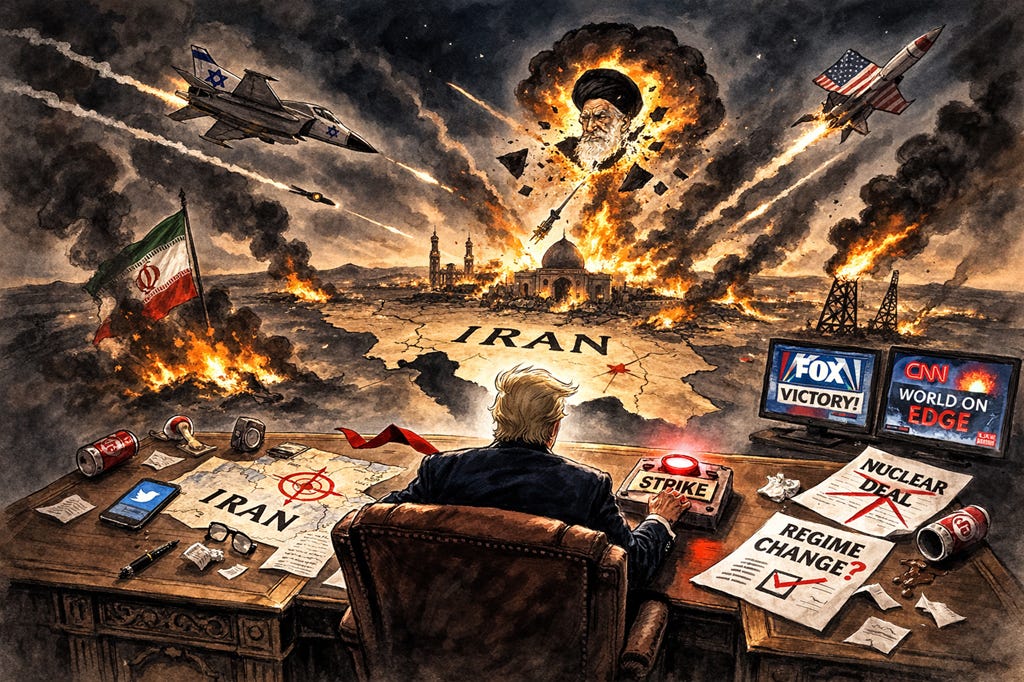
February is in the books, and on the final day of the month, the US and Israel attacked Iran, and as of this writing it appears that they managed to kill Supreme Leader Ali Khamenei along with many lieutenants. To a degree, that is already regime change. It’s an incredible, dangerous, volatile and promising situation.
This attack was the very scenario that much of the world had been nervously gaming out for weeks, debating whether Washington would strike; in truth, the decision rested almost entirely with one man. It always does in Trump’s America.
We argued throughout the month that war with Iran makes sense only under one condition: if it is genuinely aimed at regime change. Anything short of that — a symbolic strike, a punitive raid, a theatrical show of force — risks escalation without sufficient reason or payoff. And Trump, who admires strongmen and rarely shows interest in the internal liberation of authoritarian societies, seemed unlikely to pursue a coherent endgame. And yet, here you have it. Very bizarre.
To enable us to grow our platform for independent and edgy commentary on geopolitics, life, the universe, and everything, unlocl full access to Ask Questions Later — and the Critical Conditions podcast — by upgrading to a Paid Subscription
Believe it or not, there were also other stories to deconstruct in a very active month at Ask Questions Later. We devoted quite a bit of attention to the Munich Security Conference, which is basically a gathering of the government of the world. The intrepid Robert Hamilton wrote that this year’s event was basically about Europe striking back at the endless assaults from Trump; Dan Perry noted that Marco Rubio’s speech was a more polite version of the same MAGA assault as last year’s from JD Vance (a point Claire Berlinski pressed on our Critical Conditions podcast); and Alison Mutler noted that there was movement in UK statements on Brexit in the course of the meeting.
On the podcast, we addressed the incredibly dangerous Pentagon demands of Anthropic, which should keep every reader up at night until Hegseth is removed from office. We also ran debates on Venezuela and on ICE, and deconstructed the astonishing foolishness, even for Trump, of America’s pullout from the WHO.
Here are some of the highlights. We hope you peruse, and agree that AQL is the essential one-stop shop for geopolitical dot-connecting.
The Trump Decoder on Iran
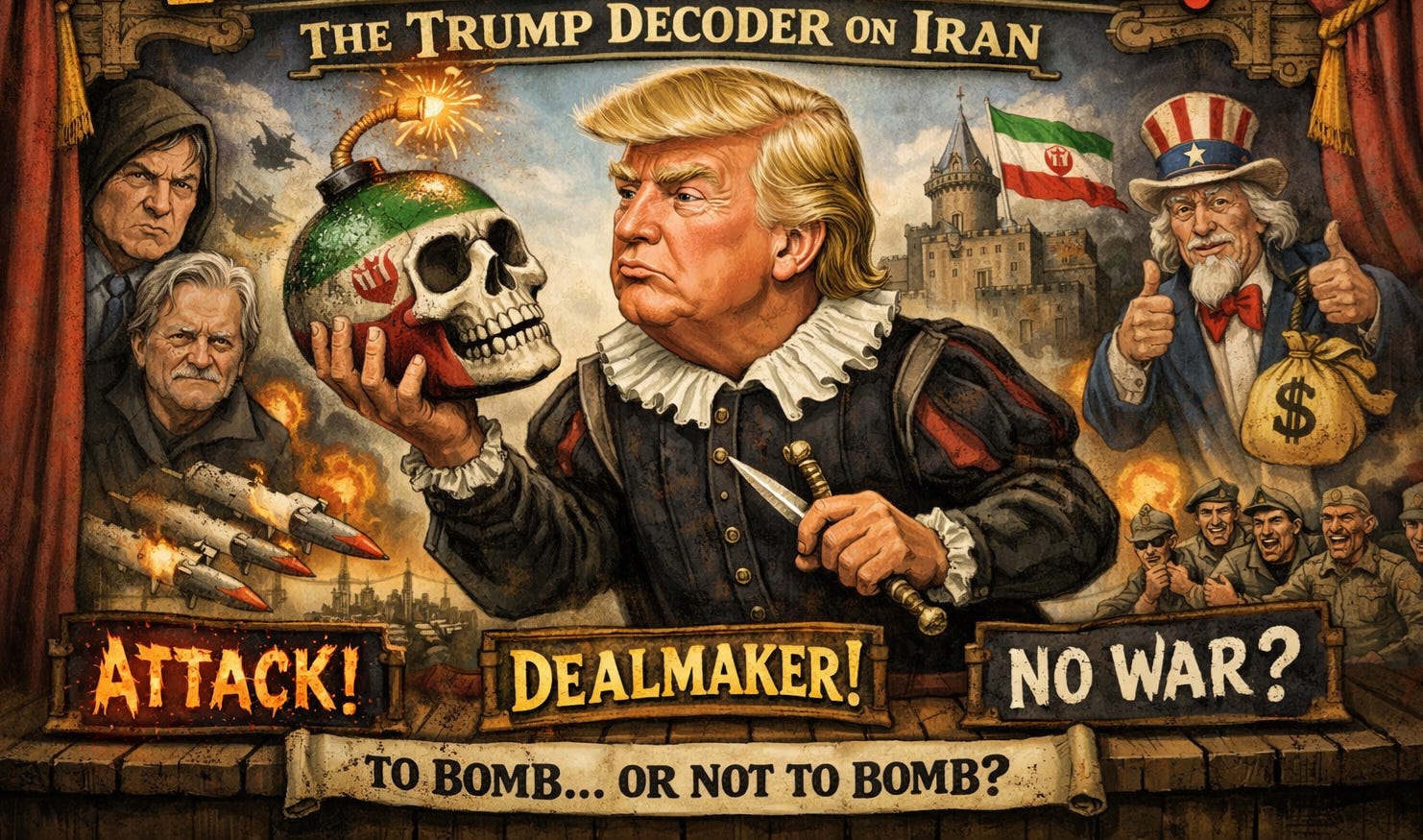
We argued that predicting whether Trump will attack Iran is largely guesswork because forecasting a single, highly unconventional individual differs from analyzing broader political patterns. We outlined eight defining traits: Trump’s egomania, indifference to truth, negotiating instincts, dependence on a loyal base, lack of policy knowledge, perceived profiteering tendencies, absence of consistent values, and exceptional ability to manipulate attention. Together, they suggest Trump would avoid prolonged wars yet remain tempted by dramatic, symbolic actions that he can spin. A dramatic, symbolic action is what we got.
Zionism and Its Discontents

We argued that declining identification with Zionism among American Jews reflects not rejection of Israel’s existence but a profound distortion of the term itself. Historically, Zionism meant Jewish national self-determination grounded in liberal principles, as articulated by Theodor Herzl. Over time, however, occupation, settlement expansion, and Netanyahu-era politics reshaped the word’s public meaning, increasingly associating it with illiberalism and permanent domination over Palestinians. The Gaza war and social-media dynamics further transformed “Zionist” into a moral accusation or slur. Sad.
Supreme Court Declares that the US is Not a Banana Republic
We asserted that the US Supreme Court’s decision striking down Trump’s sweeping tariffs represents a critical reaffirmation of constitutional limits and institutional resilience. Despite widespread distrust of the Court following controversial Republican maneuvers, we did credit it for rejecting what he portrays as an abuse of emergency powers.
Read Zuck the Riot Act
Mark Zuckerberg’s courtroom testimony claiming age enforcement is “very difficult” rings hollow given Meta’s extraordinary profitability and technical capabilities. He frames the social-media addiction trial as a pivotal test of whether platform design — not just user content — can be held responsible for psychological harm. We contend that engagement-driven algorithms systematically amplify emotional, extreme, and often misleading material, distorting politics, cognition, and adolescent self-perception. Regulate them.
The Washington Post Disaster is an Indictment of Both Publishers and Society
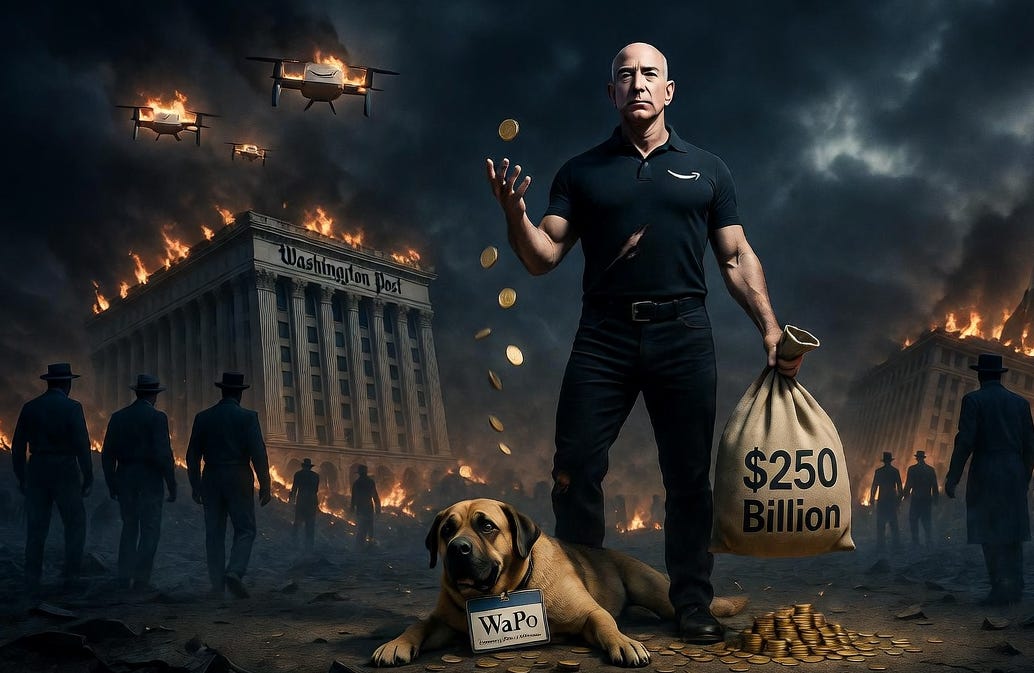
We framed the Washington Post’s dramatic downsizing as reflecting a systemic crisis extending far beyond a single publication. We contended that journalism’s collapse is driven primarily by publishers and media executives who chased technological reinvention, novelty, and audience engineering rather than protecting the core value readers actually pay for: authoritative reporting and editorial judgment. Repeated “pivots” hollowed out newsrooms while mistaking format innovation for strategy. Yet we widen the indictment to society itself, arguing that public unwillingness to financially support reliable information has undermined the economic foundations of truth-seeking institutions. The Post’s decline thus symbolizes a deeper cultural failure.
Thailand’s House Divided
We used Thailand’s election to illuminate a broader democratic dilemma familiar in Western politics: the uneasy balance between majority rule and elite constraint. We argue that Thailand’s outcome was driven less by ideology than by fragmentation among pro-reform voters, a dynamic that echoes distortions in first-past-the-post systems like Britain’s and vote-distribution effects in the United States. The deeper issue is legitimacy: when constitutional trust erodes, politics shifts from ballots to courts and crises. Thailand becomes a mirror for Western anxieties about polarization, electoral mechanics, and democratic norms.
No Reasonable Doubt: America’s Politicized Death Penalty
We used Feb. 17, the annoversary of the Cameron Todd Willingham execution, to advance a wider critique of the American death penalty as a systemic, not exceptional, failure. The core problem is the clash between irreversible punishment and the inevitability of error within politicized institutions. By prioritizing procedural finality and constraining post-conviction review, courts and officials accept the risk of executing the innocent. Unlike other democracies that abandoned capital punishment after wrongful convictions, the US remains an outlier, shaped by political incentives that reward toughness over caution.
Three Israelis, Two Visions, One Big Decision
In Tel Aviv, a young Netanyahu acolyte assaults former Supreme Court chief Aharon Barak. Days later, he appeared at journalist Lucy Aharish’s home, confronting her husband, actor and Oct. 7 rescuer Tzachi Halevi. This is a Jewish-Arab story, intertwined and unexpected, that reveals the struggle for the soul of Israel.
Bunny Sang in Spanish at the Super Bowl. Bad?
We used Bad Bunny’s Spanish Super Bowl performance to explore a larger civic question: how multilingualism interacts with national cohesion. Rejecting both xenophobic backlash and reflexive celebration of linguistic fragmentation, we argue that stable societies require a widely shared common language, even while respecting minority tongues. Minority languages can and should be preserved where practical, but full fluency in the national language is essential for integration and state function.
Thanks for this excellent publication!
Dan Perry is an intelligent man. But as we all know intelligence and emotional state of mind may not or ever mix. Dan Perry has a disability called Trump Derangement Syndrome. If readers haven't noticed by now, Mr. Perry has only negative comments regarding President Trump. Mr. Perry's intense hatred and anger guide his thoughts and conclusions. Perry's behavior is typical of an egotistical elitist. He is most certainly a legend in his own mind. Mr. Perry is not well liked in the US and could not exist as a credible journalist in the US as his thin veneer of hatred is all too obvious. Free speech is a great thing, and I am happy to express my thoughts here.