
In today’s episode of Critical Conditions, Claire Berlinski and I hosted Tim Judah—a longtime Balkans and Ukraine watcher, special correspondent for The Economist, and one of the more clear-eyed observers of Europe’s wars — about where the conflict in Ukraine actually stands, and where it is (and isn’t) going.
I met Tim first in the 1990s in Romania, and he’s been covering the region ever since. He visited several times during the war, most recent two months ago, and wrote a book about it, In Wartime. If you’re looking for predictions about an imminent Ukrainian victory, a looming Russian collapse, or a Trumpy deus ex machina — this conversation may disappoint you. But it’s a relief to hear that while Tim expects the war to grind on, things are still looking better for Ukraine.
We wouldn’t want subscribers to risk missing any of Ask Questions Later or Critical Conditions — and so are offering, for World Press Freedom “Week” only, a 20% discount!
Tim said many Ukrainians thing the end of this war may not come from the battlefield at all, but in Moscow. Historically, their fate has often turned on political upheaval there — 1917 being the obvious example — and there is an almost fatalistic belief that something similar is coming. Indeed, CNN reported today fears of a coup of some sort in the Kremlin.
In the meantime, Ukraine is adapting in ways that are reshaping modern warfare. While tanks and planes and artillery still dominate public imagination, that’s increasingly outdated. This is a drone war. Drones now account for the overwhelming majority of casualties on the front, and Ukraine is scaling production at astonishing speed, aiming for millions annually. It is also developing deep-strike capabilities, hitting oil infrastructure far inside Russia, and building out satellite systems to reduce reliance on Western providers.
This is a structural shift. War is becoming decentralized, iterative, and brutally efficient. And in that environment, Ukraine, driven by necessity, is innovating (and also producing) faster than much of the West. It is striking that Europe and the United States are not leading this transformation. Europe at least is learning; the US, led currently by a very particular mindset, mulishly refuses to pay Ukraine any mind.
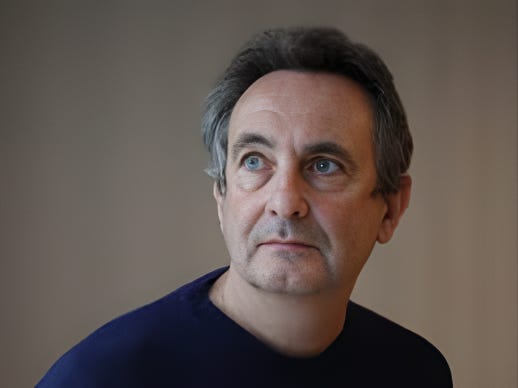
Tim made a related point that deserves attention: the asymmetry of motivation. Ukrainians know exactly what they are fighting for — the survival of their state. Many Russian soldiers, by contrast, lack any such clarity. They fight for pay, or out of obligation, or inertia.
And yet, for all of Ukraine’s ingenuity, there is no sense on the ground of imminent victory. The mood has shifted markedly since 2022. The early optimism, the talk of restoring the 1991 borders, has given way to something more restrained: survival as success. A functioning Ukrainian state, even one that controls only 80 percent of its territory, is now a kind of victory in itself.
Moreover, Volodymyr Zelenskyy is no longer the unassailable figure he was in the early months of the war, but neither is there a credible alternative waiting in the wings. Corruption scandals continue to surface, often amplified by Russian propaganda, but as Tim pointed out, their very exposure also suggests that oversight mechanisms — imperfect as they are — exist and function.
Perhaps the most quietly alarming insight came from a senior British official who recently told Tim: “It’s not 1939—it’s 1934.” The implication is that Europe is beginning to grasp the scale of the threat, but it still does not feel urgent enough. The machinery of response is turning, but slowly, and with hesitation.
Karl Marx famously wrote that history repeats itself "first as tragedy, second as farce." The danger, given the level of leadership in the world, is that we get both of these at once.