
On today’s episode of Critical Conditions, Claire Berlinski and I tried to make sense of what increasingly looks like an emerging deal between the United States and Iran, and what it all means.
The backdrop to the conversation was a flood of reports suggesting that Washington and Tehran are edging toward an arrangement that would halt war and blockades and reopen negotiations over Iran’s nuclear program. But as we discussed, this does not appear to resemble the “unconditional surrender” once hinted at by President Donald Trump. Instead, it looks far closer to a revised version of the old 2015 nuclear bargain: limits on high-level enrichment, possible transfer of enriched uranium stockpiles, and negotiations in exchange for sanctions relief and the unfreezing of Iranian assets.
Consider an upgrade to a Paid Subscription. You’ll be enabling independent reportage and commentary, joining a growing community, and unlocking access to all content.
So if Iran emerges from this crisis with its regime intact, tens of billions of dollars pouring in, and its regional terrorist infrastructure largely preserved, and no limts on ballistic missile production, what exactly was achieved? We explored the possibility that the Islamic Republic has discovered a powerful form of leverage through the threat posed to the Strait of Hormuz — leverage capable of terrifying global markets and rendering the might of America irrelevant (until means are devised to circumvent the Strait of Hormuz).
At the same time, Trump is now demanding that Saudi Arabia, Qatar and Pakistan normalize relations with Israel and sign the deal with Iran. On the one hand, this is open blackmail — but we’re used to that these days. And it seems far-fetched that they would thusly sell out the Palestinians, from the perspective of their populations at least. But on the other hand, none of these countries really care that much about hating Israel — and Pakistan, which has been the central broker of the emerging deal, has excellent economic reasons to make nice with the Americans.
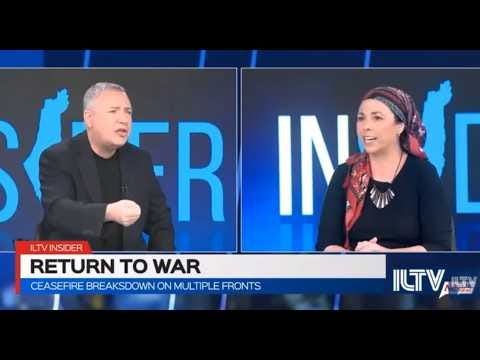
Far-fetched though it seems, should it actually occur this will change the narrative of the war from one of frustrating failure (as I told India’s NewsX TV below) to something of an electrifying game-changer for the region. And it will help Netanyahu — who otherwise looks like toast — in the October Israeli vote.
That news came too late for the podcast, where Claire and I also examined the domestic political calculations driving both Washington and Jerusalem. Trump, facing looming midterms, appears deeply wary of either an open-ended war or a global recession tied to a long-term blockade of the Persian Gulf. Netanyahu, by contrast, sees continued instability as politically useful amid collapsing poll numbers and mounting criticism.
We also discussed the growing sense inside Israel that, despite stunning tactical successes — from intelligence operations to air superiority — there was never a coherent political endgame. Israelis are simultaneously impressed by military performance and deeply unsettled by the possibility that expectations of regime change in Tehran may have been wildly unrealistic from the beginning.
The conversation then widened into a broader cultural and moral debate: should sports and politics mix? Russia was banned from the Eurovision Song Festival this month but Israel — now deeply unpopular with in many quarters — was not, leading five nations to boycott the contest, where Israel came in second. Now, with the World Cup approaching, questions are swirling around whether Iranian athletes should be allowed to compete in the United States during wartime tensions. We wrestled with the inconsistencies. If Russia can be frozen out of international competitions over its actions in Ukraine, should Iran face similar treatment? Or is punishing athletes — and their fans in miserably despotic countries — both unfair and effectively useless? Claire argued that isolating Russia may matter because the Russian elite deeply values participation in European cultural life. Iran, she suggested, may present a more morally tangled case. Neither of us arrived at a fully satisfying answer.
Finally, we touched on reports of growing unease inside Russia amid reports that Putin is living in a bunker for fear of assassination or a coup. Could there be a limit even to the Kremlin’s ability to bring destruction to the people of Russia? That would be quite a development. Stay tuned.