
MARCH MADNESS
AND AQL'S APRIL FOOLS' SUBSCRIPTION DISCOUNT - GOOD FOR ONE WEEK ONLY!

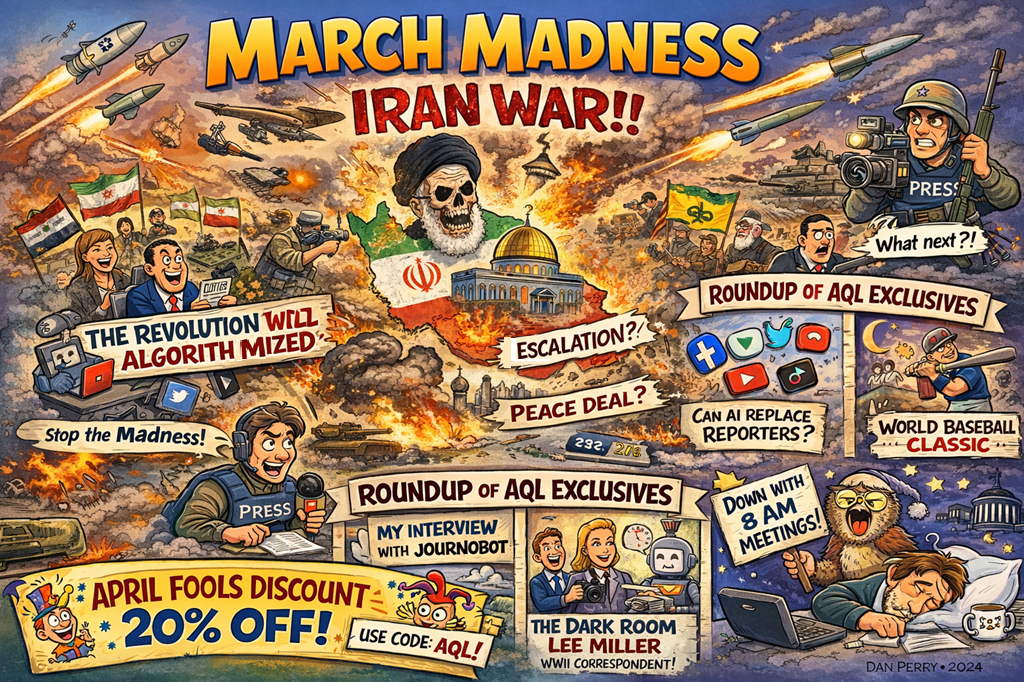
March 2026 was dominated by the Iran war, which we explored from a variety of angles — and the conflict continues into April with little clarity on whether the US will declare victory and walk away, or whether an escalation is coming. Here’s your handy comprehensive roundup.
The lunatics — and no few fools among thm — have certainly taken over the asylum! More than ever, we need independent analysis and commentary making sense of it all. Consider an upgrade to a Paid Subscription at our this-week-only 20% April Fools’ Discount. You will be enabling independent journalism, joining a growing new community, and unlocking access to all AQL content.
Ask Questions Later’s no-hold barred coverage of the war included:
An examination of whether the assassination of state leaders by other state leaders was such a great idea — noting, as strangely few have done, that there is no precedent in modern history to the killing of Supreme Leader Ali Khamenei by Israeli bombardment in the first minutes of the war.
We envisioned a deal to end the war, and three scenarios that could occur, after Iran caused global agitation by blocking the Strait of Hormuz, through which a fifth of global crude supply normally flows.
On the 47th anniversary of the fake referendum establishing the Islamic Republic, we looked at the dismal history that brought us to today. The anniversary went largely unnoted in the mainstream media, oddly enough.
We looked at Syria’s potential role in addressing the Lebanon front — and how the odd upside could be Israeli-Lebanese peace.
We examined Israel’s odd psychology whereby its citizens “stranded” abroad, away from missiles attacks, are “rescued” back home.
On the Critical Conditions podcast, we examined propaganda during wartime and life in a bomb shelter, and hosted prominent Iranian opposition figures Nazenin Ansari (managing editor of UK-based Kayhan London) and Maneli Mirkhan (founder of DORNA, an organization focused on democratic transition in Iran). Next week: A discussion with econommist James Gutman on the turmoil in global energy markets.
To unlock access to all AQL content, upgrade to Paid, at the 20% discount!
But there is more to life than Middle East wars! Here’s a roundup of some of the other exclusive essays you might have missed during March madness at AQL:
The Revolution Will Not Be Televised. It Will Be Algorithmically Amplified, If Profitable.
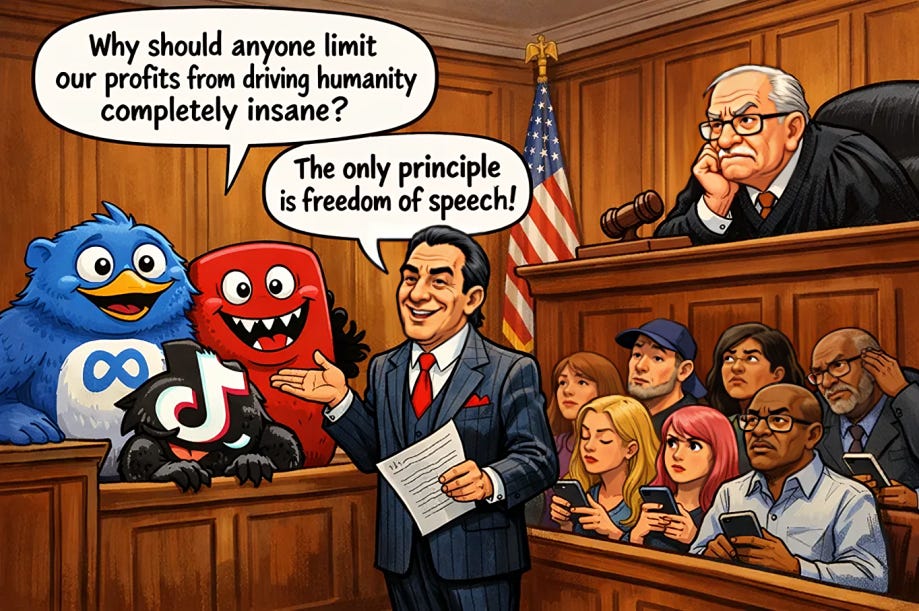
We argued that a pair of US jury verdicts against major social media companies mark a turning point in holding them accountable for harm caused by their platforms. Courts are beginning to treat algorithmic design — not just user content — as a source of liability, challenging protections like Section 230. The rulings suggest that addiction, misinformation, and societal damage are not accidental but built into profit-driven systems. While appeals may follow, the broader shift could open the floodgates for litigation and reform. We argue that real change will require regulation — perhaps in Europe — to curb harmful engagement-driven algorithms and protect public discourse
My Interview with JournoBot
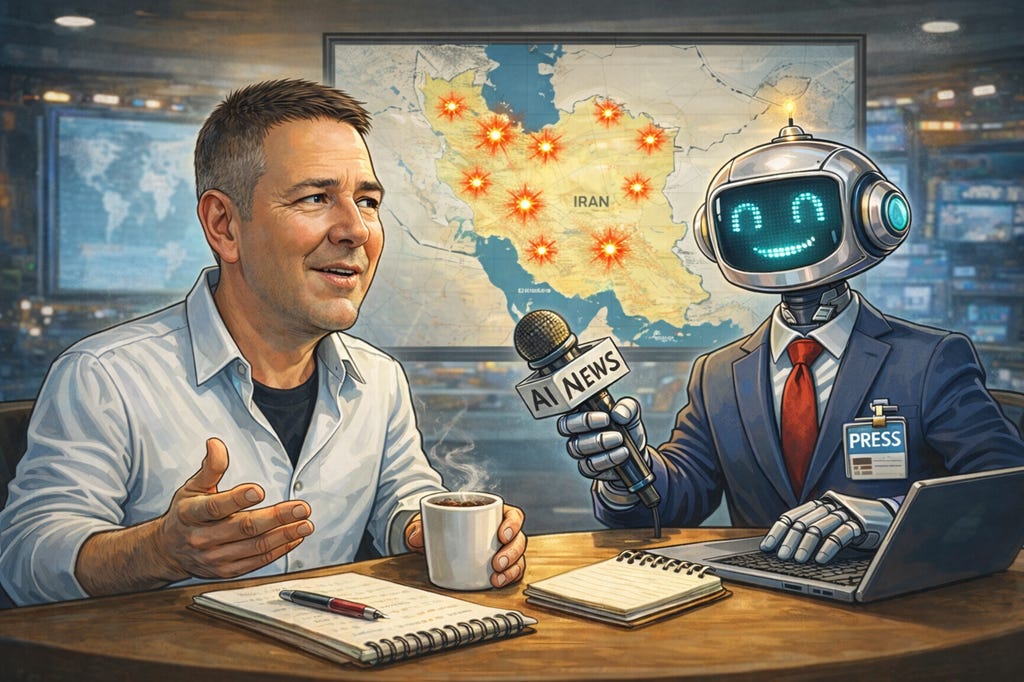
We combined analysis of the Iran war with an experiment: being interviewed by an AI “JournoBot.” We found the bot surprisingly competent — structured, informed, and capable of sustaining serious discussion — though lacking originality and true insight. The experiment suggests AI could replicate much of routine journalism, raising questions about the future of media, even if human nuance and judgment still matter.
The Tyranny of the Early Riser
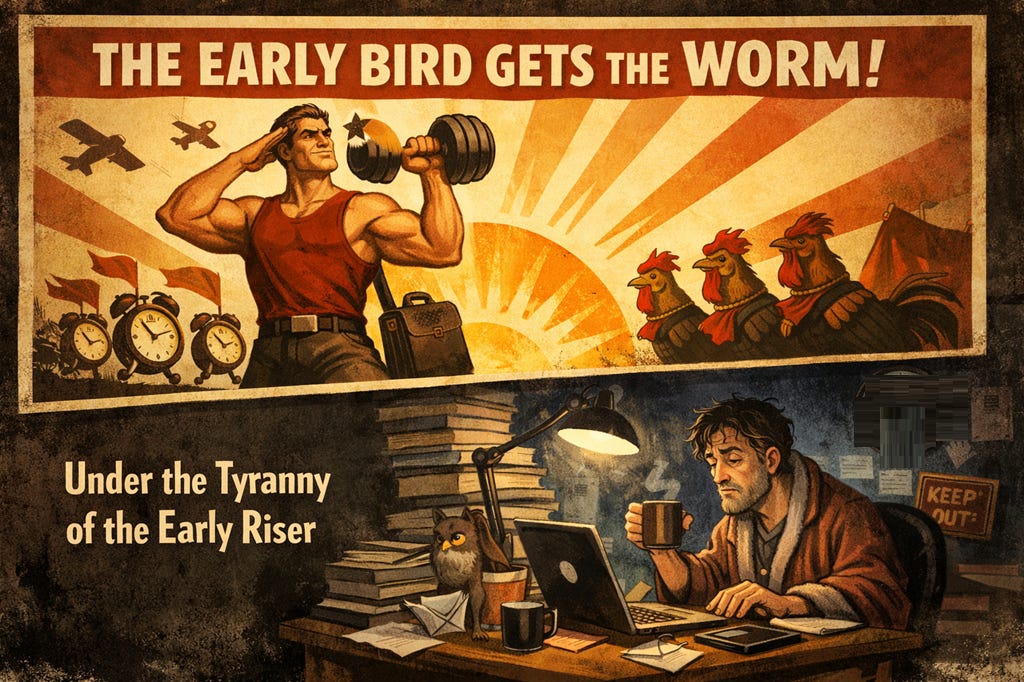
For World Sleep Day, we reprised this essay humorously arguing that society unfairly privileges early risers while stigmatizing night owls. Through cultural, historical, and personal examples, AQL explored the pervasive “tyranny” that equates early waking with virtue and productivity, despite many night owls working longer or more creatively at later hours. As this bias is rooted in tradition and outdated economic patterns rather than reality, we called for greater recognition of differing biological rhythms, framing chronotype as an innate trait deserving fairness and accommodation. We advocate flexible schedules and a more inclusive view of productivity valuing output over morning-conformity.
The Dark Room

We reflected on the life of photographer Lee Miller, after a visit to an exhibit making the rounds in Europe. Her life defies categories: a 1920s Vogue model who reinvented herself in Paris with Man Ray, helping pioneer surrealist photography, before becoming a WWII correspondent for Vogue magazine. She documented the liberation of Dachau concentration camp liberation, capturing some of the first images of Nazi atrocities. Her famous photo in Hitler’s bathtub symbolizes her improbable journey.
Israel’s New Death Penalty Law is a Disgrace
We argued that Israel’s new death penalty law is a cynical political maneuver by Netanyahu to inflame public anger, weaken the judiciary, and bolster his electoral prospects. The law disproportionately targets Palestinians and is widely seen as discriminatory, drawing international criticism. We contend it is designed to be struck down by the Supreme Court, fueling Netanyahu’s broader campaign against judicial oversight while he faces corruption charges. He warns the law will not deter terrorism, could provoke retaliation, and will further damage Israel’s democratic standing — risking a constitutional crisis and deepening internal instability.
The Real World Series?
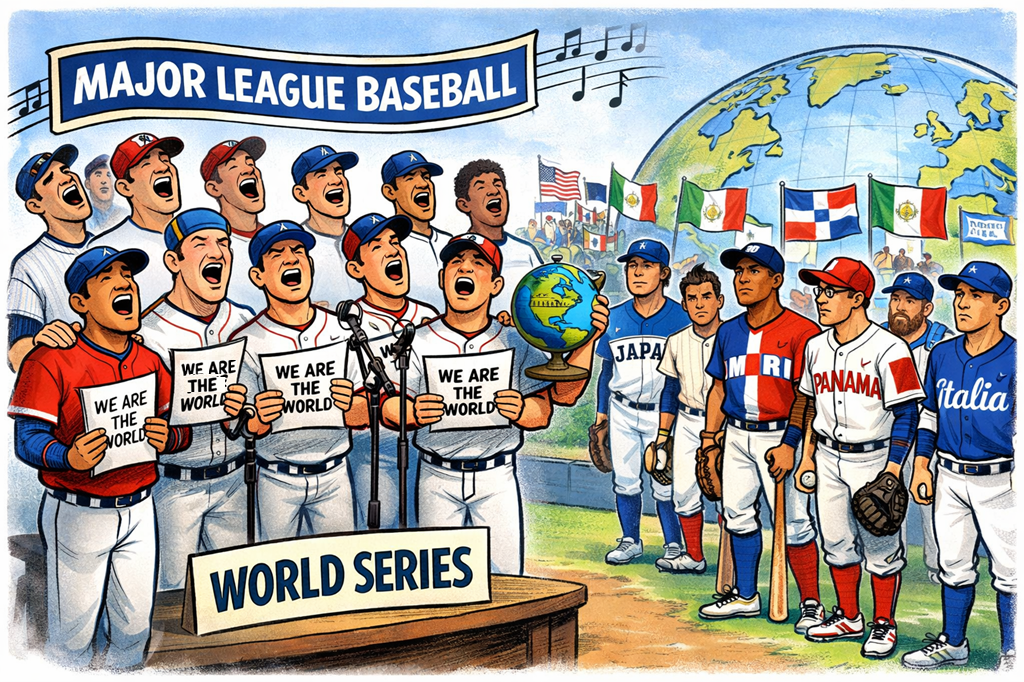
We argued that calling Major League Baseball’s championship the “World Series” reflects a broader American insularity and assumption of global dominance. While MLB is the best league, baseball is widely played worldwide, especially in Japan and Latin America. The World Baseball Classic (WBC), where national teams compete, better represents a true global championship. The story blends nostalgia with critique, highlighting how international play brings deeper meaning through identity and heritage, and concluding that the WBC offers a needed corrective to American myopia.
Will the war end in April? Well, I would have to tick the "messy confusion" because it looks like Iran has the US on the back foot. There is much talk about Europe taking too big a peace dividend from the fall of the USSR. I do suspect another form of dividend has been that not enough skilled people have been attracted to public service as the electorate have voted for a too too easy life.